

Table of Contents
- What Makes Furniture High Quality
- How to Check Sofa Frame Quality
- Solid Wood vs Veneer Furniture
- Best Furniture Joinery Techniques
- Evaluating Upholstery and Fabric Quality
- Testing Comfort and Functionality
- Warranty and Durability Indicators
- Frequently Asked Questions
Last Updated: September 30, 2026
What Makes Furniture High Quality
High-quality furniture combines solid construction, durable materials, and thoughtful design that lasts for years. At Kirkland Home Furniture in Waycross, we've helped countless families understand what separates furniture that holds up from pieces that fall apart after a few years.
The real difference comes down to three things: what it's made of, how it's built, and how well it performs over time. A sofa that costs more often uses better wood, stronger joinery, and fabrics that resist staining and wear. But price alone doesn't tell the story. You need to know what to look for.
This guide walks you through how to tell if furniture is high quality so you can make confident choices. Whether you're shopping in our showroom or browsing online, these inspection techniques will help you spot durable pieces worth your investment.
How to Check Sofa Frame Quality
The frame is the skeleton of any sofa. If the frame is weak, the sofa will sag, creak, and eventually fail, no matter how nice the cushions look.
Start by flipping the sofa over or looking underneath. A quality sofa frame uses solid hardwood like oak, maple, or ash. Softwoods like pine or plywood won't hold up to daily use. Run your hand along the frame. It should feel sturdy and not flex or bend when you apply pressure.
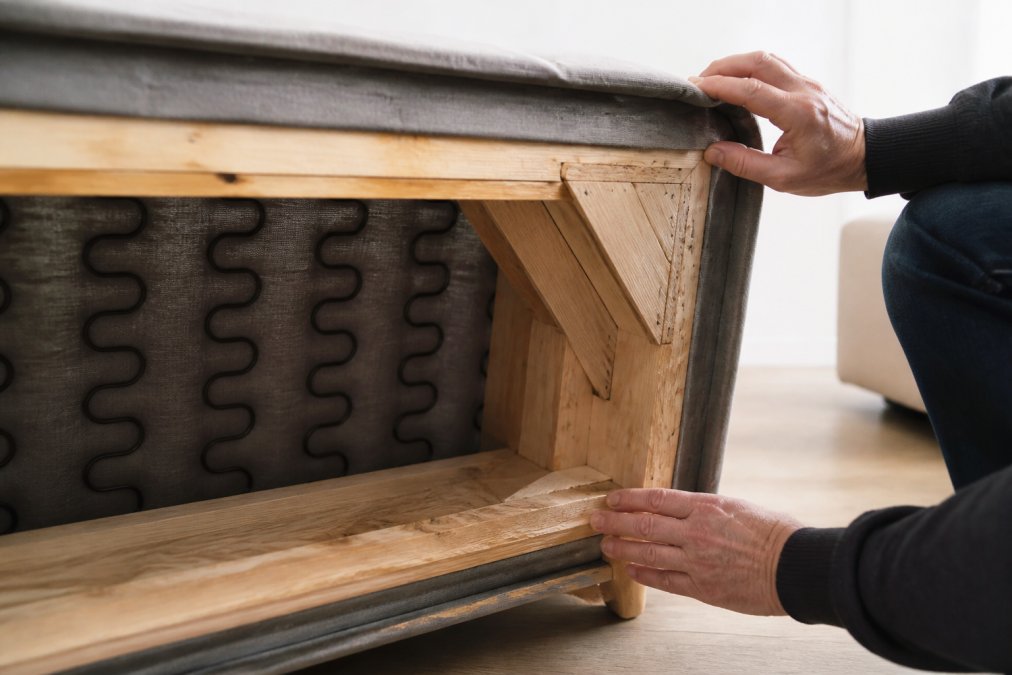
Check the corners and joints carefully. Look for corner blocks, reinforcing wooden blocks glued and screwed where frame pieces meet. These blocks prevent the frame from racking (twisting out of shape). Quality sofas have corner blocks at every joint.
The frame should be kiln-dried wood, which means it was heated in a special oven to remove moisture. This prevents warping and cracking later.
Shake the sofa gently. A well-built frame won't wobble or creak. Movement in the frame means joints are loose or the wood is weak. The Corvara Top Grain Leather Sofa from Kirkland Home Furniture uses a strong Steel Tech frame that provides the structural strength needed for years of reliable performance.

Solid Wood vs Veneer Furniture
Understanding the difference between solid wood and veneer helps you make the right choice for your budget and needs.
Solid wood means the entire piece is made from real wood throughout. Solid wood furniture costs more but lasts longer and can be refinished if damaged. Oak, walnut, and cherry are popular solid wood choices.
Veneer is a thin layer of real wood glued to a plywood or particleboard core. Veneer isn't cheap or fake, it's an efficient way to use expensive wood. High-quality veneer is bonded with strong glue and applied carefully. Low-quality veneer peels, bubbles, or separates from the core.
Quality veneer furniture actually performs better in some cases. Plywood is more stable than solid wood. It won't crack or warp as easily. But the veneer itself must be applied properly. Run your fingers along the edges. Veneer should be smooth and firmly attached. Look for gaps, bubbles, or lifted edges.
For dining tables and bedroom dressers, veneer works well because these pieces don't flex as much as sofas do. For sofas and chairs that get heavy use, solid wood frames are the better choice. Many quality pieces combine both, a solid wood frame with veneer panels on the sides and back to save cost while maintaining strength.
Check the price tag. If a piece claims to be solid wood but costs suspiciously low, it's likely mostly veneer. Honest retailers disclose the construction method. At Kirkland Home Furniture in Waycross, we're transparent about what materials go into each piece so you know exactly what you're buying.
Best Furniture Joinery Techniques
Joinery is how wood pieces connect at joints. Poor joinery fails quickly. Good joinery lasts decades.
The strongest joinery methods are:
- Mortise and tenon: A wooden peg (tenon) fits into a hole (mortise). This is the gold standard for quality furniture. It's strong and has been used for centuries.
- Dowel joints: Wooden dowels glue two pieces together. This is solid and common in quality furniture.
- Dovetail joints: Interlocking wedge-shaped cuts lock pieces together without glue. Drawers with dovetail joints won't sag.
- Pocket hole joinery: Screws are driven at an angle from inside. It's strong and hidden from view.
Avoid furniture held together only by staples, nails, or weak glue. Staples and nails work loose over time. Glue alone fails when wood expands and contracts with humidity changes.
Look at the inside of drawers. Quality drawers use dovetail or mortise-and-tenon joints. Budget drawers use simple butt joints (two pieces glued end-to-end). Butt joints fail quickly.
Examine where legs attach to the frame. Legs should be bolted or screwed on, not just glued. Bolts and screws can be tightened if the joint loosens later. Glued-only legs eventually break free.
The Kellen Woodlands Lay Flat Reclining Sofa features Steel Tech framing. The construction ensures the piece holds up to years of use without loosening or sagging.

Evaluating Upholstery and Fabric Quality
The fabric or leather you see is what gets touched, stained, and worn. Quality upholstery resists damage and cleans easily.
Corvara Top Grain Leather Sofa →
Fabric weight matters. Heavier fabrics last longer. Look for fabrics rated for heavy use (often labeled as "performance" or "contract-grade"). These fabrics are tightly woven and resist pilling, staining, and fading.
Run your hand over the fabric. It should feel smooth and dense. Loose, thin fabrics pill easily (develop fuzzy balls on the surface). Tight weaves resist pilling and wear better.
Leather quality varies widely. Top-grain leather is the highest quality. It's the outer layer of the hide and develops a natural patina over time.
The Corvara Top Grain Leather Sofa uses premium top-grain leather paired with matched materials, delivering sophistication while resisting daily wear and tear.
Check for double-stitching on seams. Single stitches fail faster. Double stitches hold up to pulling and movement. Seams should be straight and even, with no loose threads.
Testing Comfort and Functionality
How a sofa feels matters as much as how it's built. Comfort is personal, but there are objective ways to evaluate a piece.
Sit on it. This is why visiting a showroom in Waycross is valuable. Sit down for at least 30 seconds. Does your back feel supported? Do your feet touch the ground comfortably? Does the seat cushion feel firm or too soft?
Bounce gently on the seat. Quality cushions return to shape quickly. Cheap cushions stay compressed. Bounce a few times, the cushion should spring back each time.
Check the arm height. Armrests should align with your elbow when you sit naturally. Too high or too low causes discomfort and strain.
Lie back if possible. Recliners should have smooth, responsive mechanisms. Test the power reclining feature if the sofa has one. The Ashley Next-Gen DuraPella Performance Fabric Dual Power Recliner includes smooth power controls and a zero-gravity mechanism that distributes weight evenly across your body.

Open drawers and cabinets if the piece has them. Drawers should slide smoothly without sticking. Hinges should feel solid. Cabinet doors should close with a soft click, not slam or stick.
For beds, lie on the mattress for a few minutes. The mattress should support your spine in a neutral position.
Warranty and Durability Indicators
A strong warranty reflects the manufacturer's confidence in their product. Cheap furniture often comes with no warranty or a very limited one.
A strong warranty reflects the manufacturer's confidence in their product. Cheap furniture often comes with no warranty or a very limited one.
Read the warranty details.
At Kirkland Home Furniture in Waycross, we stand behind every piece we sell. Our curated selections are built to bring families together and last through years of everyday living. Visit our showroom to experience our commitment to quality firsthand.
| Quality Indicator | What to Look For | Why It Matters |
|---|---|---|
| Frame material | Solid hardwood like oak or maple | Resists warping and supports weight |
| Corner blocks | Reinforcing blocks at every joint | Prevents frame from twisting |
| Joinery | Mortise-and-tenon or dowel joints | Creates lasting connections |
| Fabric weight | Heavy, tightly woven materials | Resists pilling and staining |
| Seams | Double-stitched, straight lines | Holds up to pulling and movement |
| Warranty | 5-10 years on frame | Shows manufacturer confidence |
| Comfort test | Sit and bounce the piece | Confirms real-world usability |
Choosing high-quality furniture is an investment in your home's comfort and your family's gathering space. When you understand how to tell if furniture is high quality by evaluating construction, materials, and durability, you can spot pieces built to last.
Frequently Asked Questions
What are the signs of high-quality wood furniture?
High-quality wood furniture shows tight, seamless joinery with no gaps between pieces. The wood grain should be consistent, and the finish should feel smooth without rough spots or bubbles. Solid wood construction (not veneer) is a strong indicator, though quality veneer over hardwood plywood is also acceptable. Check underneath and inside drawers, manufacturers who use quality materials don't hide corners there. The furniture should feel substantial and stable when you apply gentle pressure.
How can you tell if a sofa is well-made?
A well-made sofa has a solid hardwood frame (kiln-dried for stability), high-quality coil systems like Comfort Coil Seating with Comfor-Gel technology, and cushions that hold their shape. Flip it over and inspect the frame for tight joinery and reinforced corners. Check that legs are securely attached and that stitching on seams is tight and even. Sit on it and look for excessive bounce or sagging. Quality manufacturers like those featured at our showroom build sofas to last years of daily use.
What should I look for in furniture joinery?
The best furniture joinery techniques include mortise-and-tenon joints (where one piece fits into a hole in another), dovetail joints (interlocking pieces at angles), and dowel joints reinforced with glue. Avoid furniture held together only with nails or staples. Joints should fit snugly with no visible gaps or movement when you apply pressure. Run your hand along seams, they should feel smooth and seamless. Poor joinery is a major red flag for furniture that will fall apart within a few years.
Is solid wood always better than engineered wood for furniture?
Solid wood is durable and can last decades, but quality engineered wood (veneer over hardwood plywood) is also excellent and often more stable because it resists warping and cracking. The key difference is that solid wood can be refinished, while veneer cannot. For high-traffic pieces like dining tables, solid wood is ideal. For sofas and upholstered furniture, a solid hardwood frame with quality springs and padding matters far more than the veneer question. Look at the frame construction first.